Monday, March 27, 2006

A Tribute to a Cheerful Spirit


When Grey Shadow passed away a few weeks ago, my heart wrenched like it has with no other animal’s passing. His death was not expected, and for me, it was a loss of a consistently friendly face.

Grey Shadow, a low-content wolf-dog who came to the Sanctuary with his mate and son, was one of the most entertaining characters in the compound. He was full of health problems, arthritis, hypothyroid, obesity, and still expressed side effects of a previous mineral deficiency. So perhaps, his death should have been expected at any moment. However, this wonderful “tub on legs” never shown any signs of pain or discomfort, and in fact, may very well have been the happiest animal at the Sanctuary.

Care-takers were constantly greeted with as much licking as they could handle, and much scent-rolling and affection for as long as they were interested. After his initial greeting, Grey Shadow would tumble off, and often, investigate the fecal bucket his human friend had brought in, as though it was his own personal treasure chest. This particular habit, while not necessarily appealing, was one of his most endearing traits. It was a well-known fact throughout the compound that two things made Grey Shadow happy: Food, and, well, poop.

Grey Shadow had a wonderful demeanor. Each time I walked past his enclosure, he was guaranteed to stiffly push himself up from the ground, trot over and, tongue hanging limply from his mouth, greet me as I passed. He was completely content to busy himself with sun bathing, resting in the shade, slowly munching on bones and left-over breakfast, or, when a friendly bi-ped assisted, go for a short walk. Grey Shadow was easily pleased with a short walk of five-ten minutes. While he enjoyed this thoroughly, he would tire easily, and if he did make it too far from the compound, become stressed being away from home too long.

One time in particular, it was as though he suddenly realized we had made it too far. He stopped in his tracks and refused to go in any direction but back the way we had come. I desperately tried to convince him to go the shorter route back to his enclosure, as we had been going in a circle, but he was dead-set on returning the path he new to be the way home.

I suppose I must realize that Grey Shadow is in a happier place now. He’s probably much lighter, and more energetic. But I can’t help but think that for Grey Shadow, his reward in spirit is not countless meadows and forests to run through freely, but instead, a nice shady tree to lay under, an endless meaty bone, and a treasure-filled fecal bucket.

Monday, March 20, 2006

An Owner's Torment


In the last week or so, the Sanctuary has acquired two new animals, Rain and Cheyenne. Rain, a one year old mid-high-content wolf-dog from Southern California, and Cheyenne, an extremely high-content wolf-dog (think pure wolf with pointed ears) from North Carolina.

Over a month ago now, we received a call from a heart-broken woman named Sherry. About 5 years ago, Sherry purchased a female high-content wolf-dog. While we never advise ownership of these animals and are adamently opposed to breeding and sale of wolf-dogs, Sherry has been a delight, as she is one of the most responsible owners we have ever come across. She did her research. She built an enclosure that was 1/4 acre. She included a tall fence, an overhang, and a containment area. While she became very affectionate with the female, she never once considered the animal a pet, but more of a companion in her back yard. Soon after having the female, Sherry began getting concerned about having her alone, and when she visited a breeder to inquire about this, she found Cheyenne. At the time, Cheyenne was only a couple of weeks old. The owner, a backyard breeder with tiny enclosures, poor conditions, and bare-minimum socialization, was keeping all of his animals in a situation that was heart-breaking. As Sherry looked at Cheyenne, while not wanting to contribute to the breeder, her heart leapt, and she made on of the hardest mistakes to avoid. She purchased Cheyenne in an attempt to save just this one animal for poor conditions, and Cheyenne became a companion for her female.

Five years down the road, Sherry experienced one of if not the most heart-wrenching experiences of her life. While the enclosure contained an overhang and a containment, it had no ground wiring. Sherry new this was a problem, and a few times, the female did escape, but only to scratch at the door to get Sherry's attention. After much procrastination, the groundwire remained unlaid. One day, the female escaped, and within no time at all, was shot. Sherry was heartbroken and completely disgusted with herself for letting this happen. In the next few weeks, as she looked through her tears out the window to Cheyenne, howling alone, pacing alone, staring into nothingness alone, and barely eating or playing, her heart began to break anew. Here was an animal who was completely unsocial, who's only companion in life had just been lost to him. While Sherry had attempted to give the pair the best life she could, she new she had let them both down, and now, Cheyenne was languishing.

When a wolf is alone, they think of nothing other than finding companionship. They are such strong social creatures that alone, they cannot survive, and sometimes, are so depressed that they may die for no explainable reason other than a broken heart. This is especially apparent when an animal loses his or her mate.

Cheyenne proved typical. He mourned, he became less active and less interested in food, and, spent his days pacing the enclosure looking for a route to escape. The drive to find a companion is so strong, that when an animal is put into this position, they will continuously search until one day, they do achieve their goal of escape. This is often when miraculous climbing, jumping, digging, and destruction is seen.

Sherry was devastaded at the loss of the female, especially due to the bond they had shared. But now, more than ever, she realized how much she had let the pair, especially Cheyenne, down. Here was an animal languishing in her backyard, and she could do nothing to fix it... When she called the breeder, his answer was, "Just get him another female." Sherry, by this point, had fully accepted that she could not contribute to breeding anymore, and that she had failed a pair once--she was not going to do it again.

When Gary received the phone call from Sherry, his heart went out to her. We in the business of rescue constantly here cries of "My wolf-dog attacked me," and "he's destroying my house," and "it's illegal to own him here." We also consistently hear stories of disgusting abuse, neglect and malnourishment constantly. Here, for one of the first times ever, we were talking to a woman who completely admitted to her mistake, had done her absolute best in the aftermath to provide an adequate environment, and now, devastated with her failure, was doing whatever she could to place her animal in a safe, healthy, and fulfilling environment.

While the stories of animals being rescued that were abused immediately fuel ones passion to save the creature, Sherry's story of personal torment was enough to inspire a move to Sanctuary. While we were completely full at the time, we knew, that unfortunately, we could expect a few losses in the near future as animals such as Loki were showing signs of the end. We also knew that Cheyenne, if not rescued now, was bound for the abuse and misery, and eventual death, that so many animals constantly suffer. He would escape and be killed. Or, he would find himself being euthanized at the humane society. Or, he would languish and die, whether with Sherry, or a less-appropriate home. Sherry made it easy... She agreed to pay for all transport expenses, as well as a vet visit including Cheyenne's neutering. Cheyenne was also the type of animal we specialize in and accept, a high-conten wolf-dog with typical behavioral issues (he is completely unsocial.) With much work, complete with the great assistance of Continental Airlines, we were able to bring Cheyenne to the Sanctuary.

Cheyenne's story is one of salvation. However, while his is not a story of severe abuse and recovery, it is instead a story of the heartbreak of an owner who desperately attempted in every way possible to provide two animals with the proper environment. Even doing all of her research, even doing everything she possibly could, she still could not provide for these animals. Perhaps for those who are not affected by the statistics, by the educational material against owning high-content and pure animals as pets, and by what would seem an obvious reason not to purchase a wolf or wolf-dog, perhaps for them, Sherry's story of a responsible owner's torment may help instead.

Cheyenne's transport was not easy. But now, he resides at the Sanctuary, currently in an isolation enclosure while he becomes introduced to his surroundings and a new enclosure on top is prepared for him. In the meantime, another new arrival, Rain, is flirting in her wolfy way, through the isolation enclosure next door to him.

Wednesday, March 15, 2006

Blizzard


Saturday, after many months of so-called winter, we had our first real snow fall. During the early part of the weekend, the winds blew, the air grew chill, and snowflakes scattered throughout the day. On Saturday, for the first time, a blizzard hit us, and Sunday morning, we woke to two feet of snow and many very frisky wolves.

While for us humans here at Wild Spirit, snow can add quite the difficulty to every day activity, it’s an evocation of energy for the animals. Sunday, as we trudged from our hogans and trailers down the hills to the compound, the howls were strong and frequent, and within each enclosure, couples were frolicking, pouncing, wrestling, and munching on snow.

When I originally woke up, spoiled by my location down front, I crept out of my bed, through the gift shop, to open the door to find three very chilly outdoor cats awaiting some warmth. Smiling, I picked one up, and accompanied by my dog, Nakita, we stomped our way to the kitchen. Every inch of the property was frosted, if not covered, with snow. As the clouds cleared in the morning, the bright sun reflected off the drifts, and on the hill side was a landscape of trees, frosted with sparkling snow. The air was cool, and as the snow crept into my boots, my ankles became chilled, but the sunlight was strong enough to keep me from shivering. As I stepped in sight of the compound, the animals began their early morning howl, which was crisp and clear in the winter air, but was quickly muted by the snow.

The snow was so deep and dense, that there was no possibility of our small staff trudging through the compound to feed. We instead, began digging out one of our trucks, from the bed of snow it had found itself in. By the tool shed, our elderly couple, Zoe and Ishi, also took part in the playfulness of the day. While their romping was greatly subdued in comparison, both Ishi and Zoe pounced in the snow, both together and alone. As the day went on, their energy seemed to lower, and Ishi and Zoe were found curled up into one snug ball, almost blending in with the snow.

We loaded up the back of the truck with loaf, our regular Sunday feeding, and while Kris and Sean stayed up front, Jill (one of our weekend volunteers) and I climbed into the back of the pickup, and road the rough ride up to the top of the compound. Nakita, upset that I was leaving her behind, scurried along behind our path, and I watched my little dog scattering over the snow surface. At the top, we all climbed out of the truck, and trudged over hills, loaf in hand, to feed all of the animals.

As I entered into Lupe and Embla’s enclosure, I immediately fell head first into the snow, only to open my eyes to two very curious wolf-dogs. Lupe, recognizing his caretaker, no matter how ungraceful, gave me a quick lick on the cheek and then pranced off to continue his snow-play. I looked down at my poorly formed snow-angel, and hoisted myself up to exit and continue feeding.

When we were finished caring for the compound, we all returned to our volunteer kitchen, heating our soaking-wet clothing and numb fingers by the one propane heater, and chattering light-heartedly about the snow. As I grabbed a cup of coffee and sat down by the window, Nakona, our nearest neighbor, jumped onto the top of her house, shook her body, scattering snow-flakes, and began a strong, piercing howl. Quickly, she was joined by her fellow compound residents, and a loud chorus of wolves began mingling with the noisy-quiet of snow.

The rest of the day was a quiet one. There were obviously no tours, as our road was completely closed. There was little to be done outside with so much snow in our way. And as I listened to the chatter of staff members around me, and the vocalizations of our wolf-residents, I smiled, enjoying winter more than ever before.

Winter Awakening

“And suddenly I am awakened—not from a nocturnal sleep, nor a blurred daydream—but from a life, an existence. Only a moment ago, my fingers were numb and throbbing, the blood rushing to them in an attempt to regulate heat. My hair, a tangle of fire, blazing in the wind, my cheeks, chapped with chill, and my body, shivering in the blizzard. But suddenly, there is quiet in the storm, and I find my self sitting calmly in a drift of snow, warm, and for perhaps the first time, truly awake. There is no other human here, but for some reason, I feel less lonely than ever before. There is no sign of the storm settling, nor is there shelter in sight, but for once, I feel truly safe. There has been no climactic event, nor have I learned any important lesson, but here I am, opening my eyes, and feeling a total sense of well-being fill my whole.
As I close my eyes, in an attempt to save this scene forever in my mind, a single howl begins a chorus of fifty wolves that will carry through the mountains, and then become absorbed in the snow as quickly as it began.”

Saturday, March 04, 2006

Beyond the Obvious Epidemic

Today, Jim and I met up with Jan, Dick, and Rebecca for our most recent outreach event at the grand re-opening of Petco. While Raven was a little too tired from the week's excitement to attend, Aylah and Arrow were their normal pleasant ambassador selves, and we also brought one of our sanctuary animals, Kaisa.

Kaisa is an extremely low-content wolf-dog who has spent almost her entire life at our sanctuary. After her and her littermates were born to two animals rescued from a horrible puppy-mill atmosphere, Kaisa and her brother Kireon were brought to the sanctuary and placed with an animal named Dancer. Fairly early in his life, Kireon left us, and Kaisa grew to be Dancer's mate. For the first several years, they lived happily together, and Kaisa developed into a very social, sweet girl, who loves attention. When Dancer passed away, Kaisa was left to her enclosure by herself.

Kaisa loves people, attention, and going for walks. She's very submissive to human-caretakers, and can even become shy when someone leans over her or she feels overwhelmed. She is very well-behaved on a leash, knows how to sit on command, and does not dig, climb, jump or act destructive in the slightest. Size-wise, she probably weighs roughly 60 pounds. She has beautiful almond eyes, petite features (including feet) and an adorable fluffly tail that curls slightly at the bottom. This is not a wolf-dog, and not an animal that belongs at our Sanctuary. While Kaisa has a good home here, it is not as good as she deserves. She deserves a big back yard, the size of her current enclosure, but one that is attached to a home with a family that loves her, walks her, and offers her all of the attention she could desire. She deserves the life of a normal, domestic dog. Instead of re-mating her, she has become the only animal up for adoption from the Sanctuary in many years.

Kaisa had never been indoors until last night. As we coaxed her into Jim's mother's house, she was so fearful of the new atmosphere, she dropped to the carpet and began crawling on her belly throughout the room, as though trying to find safety in being grounded. As we took her to the back porch and I sat with her, she moaned slightly, and my heart began to break in a new way for these animals.

While wolves and wolf-dogs of any content-level are terrible pets, there are some animals that are so low-content, that no wolf behavior surfaces at all. However, these animals are bred over and over again in the US, sold to buyers who are interested in owning a wolf, and then treated with the same bias that has been placed on wolves by the general population. There is such a strong surge of ego that arises in humans--particuarly Americans--to own an exotic pet, a "dangerous" guard dog, or a "spiritual-being," that wolf-dog ownership has become an epidemic. The obvious problem with this is the maturation of an animal that was never meant to be a pet. These animals are then abused, abandoned, and/or euthanized, and only a lucky few find themselves in Sanctuaries like ours. The not-so-obvious problem with this, is that sometimes, the urge and dream of these people overcomes the animal's true nature.

Each day working in administration, I receive 1-7 phone calls from people wanting to place a wolf-dog that is otherwise going to be euthanized. Most of the time, 5 of these are animals that probably have no more wolf in them than your average miniature dauchsund, or so much dog in them that they should never have been titled a "wolf-dog." I've received pictures of mixed-labradors, collies, huskeys, malamutes, german shepherds, and even Irish Wolfhounds--all animals that have virtually no (if any) wolf in them at all, that are awaiting euthanasia because someone went around calling them a wolf-dog. Sometimes it is because a normal dog behavior that could've been modified, is automatically considered to be a wolf-problem---a new scapegoat for irresponsible owners. "My wolf-dog tore up my couch!" And I can't help but think, "So did the terrier-beagle mix I had growing up."

I wanted to reach through the phone and strangle a woman from the Humane Society in Texas, recently. She had called 48 hours prior to the euthanasia of an animal they were calling a wolf-dog. I asked her to send us some pictures through email. When I received the pictures, I looked at a white dog with black spots, pointed ears with no fur, a pink nose, tiny feet, a curled wagging tail, and a coat that in the dead of winter was one-coat of thin, short fur. When questioned about the animals behavior, the woman explained that he loved people of all ages, walked well on a leash, and liked all other dogs, however he could be "very food aggressive if you try to take his food away." This was a dog. A pure dog. Perhaps one hair on the tip of his wagging tail was wolf. I asked the woman how they knew it was a wolf-dog. She said that one of the shelter people said she was, and wasn't it obvious? I told her that I, and the rest of the staff, were 99% positive that the animal had no wolf in him at all and that they should find him a good home like any other animal. She told me that his paperwork already said "wolf-dog," and that there was no turning back. This animal either had to go to a wolf Sanctuary or be euthanized.

As I sat with Kaisa, I thought of her and the few other animals we have at our Sanctuary like her. There is Greebo and Hooter, animals labled with wolf who's only indiscretion was getting too playful with a neighbor's cat. Meea, a pure dog who was sold as a wolf-dog and then found to be illegal in the state she was taken to. Artemesia, who, as a puppy "looked very wolfy." These animals have no business being at our Sanctuary. They belong in a home, just like any dog. But if they hadn't come to us when they did, they would've been euthanized.

As Kaisa crawled across the floor, my heart broke. Here is an animal who could be living the happy, social life of any dog, with a family, who has had to spend her life in a sanctuary that should be housing wolves, and because of this, she has never learned to live a normal life. Kaisa should not be crawling on her belly indoors, she should be quickly jumping off of the couch, so as not to be caught by her owners as they open the door. She should be curled up in front of a TV with a couple of kids. She should be chasing the house-cat through the kitchen. She should be sleeping at the foot of someone's bed.

With time and the encouragment of a loving owner, I'm sure that Kaisa will adjust to life as a "normal" dog. However, she will never escape the haunting title of "wolf" placed on her many years ago. If an official wanted to take her away and euthanize her, he could use the claim that he rabies vaccination hasn't been proven effective in wolf-dogs. If Kaisa were put into a situation--cornered, threatened, beaten, and she snapped in fear, leaving so much as a scratch on a person--she would have to be euthanized. If her new home for some reason left her at the humane society or some other shelter, she could not be re-adopted, she would have to be euthanized as well.

In the past year or so, Wild Spirit has decided to only accept high-content wolf-dogs and pure wolves. Low to mid-content animals can sometimes be placed in other rescues or in special circumstances, in a home. We are one of the few facilities in the nation capable of the care of a high-content or pure wolf. In the past, when there was space, any animal was accepted, and thus, animals like Kaisa, were brought to spend their life somewhere they don't belong. While we are opening our door to animals that have no where else to go, and choosing not to accept animals who would be better off somewhere else, there is no end to the ego that forces pure dogs and practically pure dogs into euthanasia. Thousands upon thousands of wolf-dogs are euthanized in the US alone every year... One has to wonder how many of these are actually dogs, stricken with a bias that should never have entered into their lives...

Kaisa, I am confident will find a good, loving home, where her new owners are understanding of these issues... Thousands of others will not. The wolf-dog epidemic goes beyond the obvious... but whether it be dogs given a death sentence because of bias, or wolves and wolf-dogs given a death-sentence because of ignorant ownership, ego, a lack of education, and irresponsibility are murdering thousands of animals every year... And while the tears I cried today are of a new pain, they are not tears that will stop anytime soon.

Wednesday, March 01, 2006

Raven


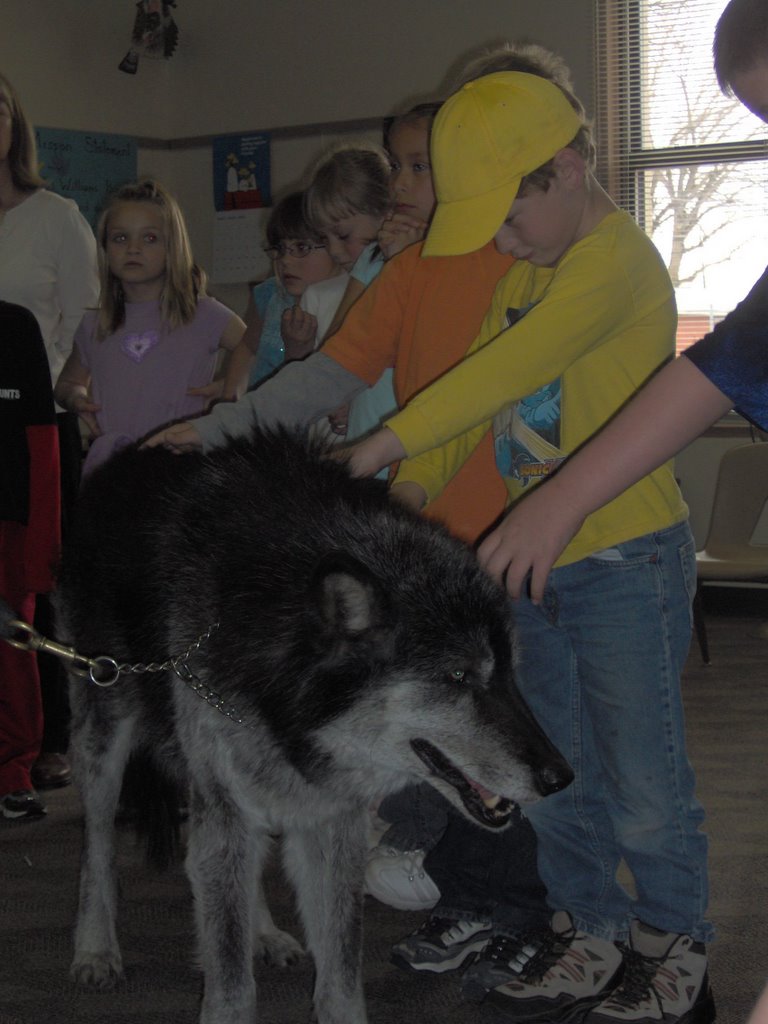
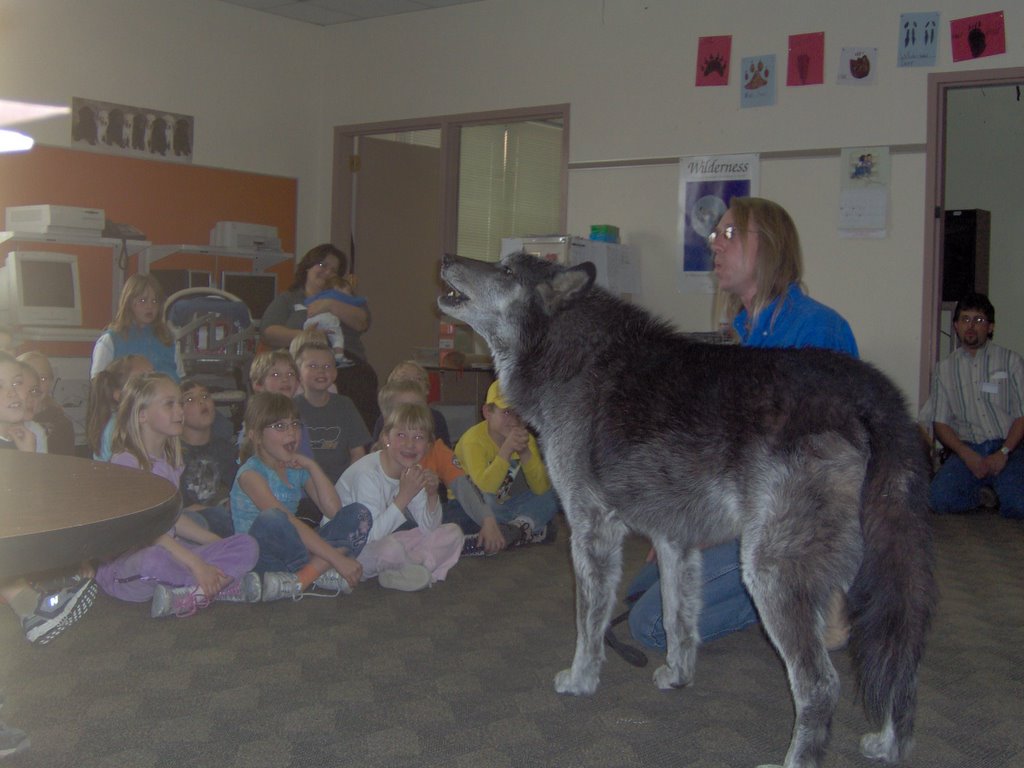
Today I had the opportunity to go to Aztec with Leyton and Raven for an educational program. Raven, a black-phase timber wolf, is one of the best-known wolves in America, as he has been a miraculous outreach animal. Out of all of the events he does, his favorite definitely appears to be children's educational programs. Once in the classroom today, Raven immediately attempted to greet everyone in the room. Always saving this for last, Leyton asked him to wait, and Raven patiently laid on the ground as Leyton taught the children about wolves. When asked to, Raven would stand to display physical characteristics, and then, proceed to lay back down to rest. At the end of the presentation, the children all gathered in a circle, and Raven was at last able to greet each and everyone of them with sniffs, and kisses, and rubs, and even some gentle tug on clothing. The class also participated in a wolf howl, which Raven kindly joined in.

Raven is a truly amazing animal. His patience is remarkable only under his majestic appearance. This large animal, with an impressive appearance, is equally as miraculous in his disposition. With one look into his stunnning eyes, the spirit of the wolf is felt, and with one lick of his gentle tongue, the fear is dismissed. Out of the hundres of animals we have met, Raven is the only one who has been able to consistently do the things he does. In his publicity, he has touched the hearts--and perhaps more importantly--the minds of thousands if not millions of people. I've had the chance to work with Raven at several outreach events, but this was the first time I was able to attend one of his school presentations.

The impact of a wolf walking into a classroom is remarkable. At first, children seem to be semi-nervous, or as though Raven is just a big dog. When his interaction is seen, the fear subsides, and throughout the presentation, children learn how Raven is different from a dog. One of the hardest balances to meet with children, especially when they are younger, is that between educating them that wolves are not the big-bad creatures displayed in stories like Little Red Riding Hood, but at the same time, they are not meant to be pets... Raven, in all his wisdom, is a perfect spokesmen for these two things. His gentle nature is apparent to all of those who have the chance to interact with him. However, his interaction with Leyton can be prompted to show the wild instinct and nature of a wolf. Yet still, Raven can be misleading. One of the points that must be pummeled into people's heads is that Raven is not a normal wolf. Normal wolves are scared to death of people and not nearly as patient with our mistakes in body language.

Without Raven, our educational outreach program could never be what it is. Raven, for whatever reason, seems to have realized that this is his job in life. He acts as an ambassador for all of his kind, and with great pride, he teaches thousands of people all about his kin.

Thursday, February 23, 2006


Last evening, Loki passed away. This was not a surprise by any means, as he has been on his way out for over a week now.

Early last week, Loki stopped eating and became extremely lethargic. He ceased coming to the fence for his med-ball, his interaction with Zoe became minimal, and normally a skittish animal, he showed no response to caretakers in his enclosure. As we watched him, slowly starving himself and fading away, the idea of euthanasia came up and became quickly dismissed.

While euthanasia is always a difficult idea, when dealing with captive-bred wolves, it can become increasingly difficult. A wolf in the wild generally has a life span of only 6-8 years. This can be because of the stress of hunting, roaming and living in situations that are not always perfect. Also, in the wild, if an animal begins to show weakness whether because of age, sickness or injury, they are immediately ousted from the pack.

In captivity, our animals are provided with food, deal with only one mate, and are provided with veterinary care and vitamin supplements. We have animals that have lived beyond 17 years of age, more than half the natural life-span for a wolf.

When one begins to think about how unnatural this is, questions of ethics and morality are forced. Are we doing what is best for the animal in prolonging a life that is naturally meant to be less than half of the current lifespan? Further, by prolonging life of the animal at all, is this truly the most humane when dealing with an animal that is truly supposed to be in the wild? Is this prolonging of life merely prolonging imprisonment? Would being euthanized in a regular dog pound be a better choice so that the animal could become free, at least in spirit?

But we have decided to allow these animals to live their lives out in our sanctuary. And by doing so, we have accepted certain responsibilities. We have in some ways, accepted the responsibility of the pack. As other pack members do, we provide food, companionship, and safety to our residents. When an animal reaches a point where the quality of life is beyond redeemable, should we too accept the responsibility of the pack to end the suffering? Is euthanasia the closest method to mirroring the ousting of a weak member from a pack? Or is our place meant to be to leave the animal to die of its own--no matter how lenghthy and gruesome of a process this may be? Is it more "natural" to let the animal go without assistance? Can anything be considered "natural" when a wild animal is forced to live his/her life out behind chain-link?

As Loki began to pass away before our eyes, I found myself compelled to sit in his enclosure frequently. I did not pet him or attempt to offer comfort. Loki has never been a social animal, and while as Amarock passed, I attempted to offer her with the comfort of soothing pets and silent companionship, I simply offered Loki my presence from a distance. As I sat there throughout the days, I went from feeling sheer pity at his suffering, to accepting his path, to feeling anger at his life... From one end, my relationships with domestic dogs began to take precedence. I looked at Loki as a companion animal, a member of the family, passing to another world and leaving a family behind. However, with time, I began to realize in myself that this is a totally different world... Loki did not lead a life like a domestic dog. He was not part of a human family. My anger began to rise as the moral dilemma of prolonging imprisonment surfaced in me.

Life at the Sanctuary is often culminated with death. Only in Isis's death did I feel her presence the way that those had grown with her felt. As Amarock passed, my heart ached at the loss of a social animal but rejoiced that she no longer had to drag her hips behind her and trip over her own legs. As Loki passed away, he brought more issues to the surface of my mind...

Dealing with captive wolves, even while understanding the major differences, can easily allow one to fall in the emotional mindset of domestic dogs. The differences go beyond simple precaudal glands and rounded ears verses pointed ears, and even beyond acts of ritual domination... There is an entirely different moral code. When we as rescuers take on the responsibility of their care, we must also take on the responsibility of the pack and of nature... Something that remains out of our grasp...

Monday, February 20, 2006

Wednesday, February 15, 2006

Walking into Broader Horizons

Last week, two of our animals went for their first walks in years. Since I came to the sanctuary, as with most new volunteers, I've fallen in love with Amadeus. He's a lovable guy who's especially affectionate with females. His two penmates, Shauney and Wapahnee, are very low-content, low-maitenence girls who love to go for walks. Amadeus, on the other hand, up until recently, was scared to death of collars.

This fear is two fold. In Amadeus's original home, instead of giving him a collar, they simply wrapped part of the three foot chain around his neck. As he grew larger, it became embedded in his skin and had to be surgically removed when he was rescued. Also, Amadeus has a tendency toward ear infections. In his original time at the sanctuary, the only time he went for walks was when they led to transport to the vet. These two situations have caused him to be very shy toward collars.

For weeks, I tried to get Amadeus accustomed to various collars as well as attempting a harness. Other volunteers and staffmembers also attempted this process, however, to no avail. Eventually, when it came time to move the Seal Beach pack (as the threesome has come to be known) we had to use more forceful methods.

Gary and myself, along with the assistance of our two volunteers, James and Hallie, ended up cornering Amadeus to put the collar on. As expected, Amadeus was nervous and fearful. As Gary tried to put the collar on, Amadeus snapped and growled and cowered into my arms. As eh became completely submissive, I was able to easily slip the collar around his neck. As we led Amadeus outside of the enclosure, he was at first nervous. Once outside, however, it was though he realized, "Hey, this is okay!" The rest of Amadeus's walk was an adventure for him, and since then, this wonderful guy has been on four other walks, each becoming progressively easier and more enjoyable...

Gaia, another low-content animal, had never been on a leash before. Previous attempts had been made, however, she always became too frightened. Recently, after Gary made an attempt, I was able to walk right in, and as she rolled onto her back submissively, slip the collar over her head. Once on the leash, Gaia became nervous and didn't know what to do. We took two steps out of the enclosure, and then she decided to go back in. After walking around inside some more, we tried leaving again, and this time, Gaia became braver, and we suceeded in going for a walk, followed later in the week by two more.

Leyton's response when we brought Gaia to the office was classic. "Gaia? Oh Gaia!" Followed by much love and affection.

I can't express how fulfilling it is to make these advancements in the life of an animal here. When an animal puts their trust in you, allows you to do something to them that frightens them, and they then realize that it is for their sake, you cannot help but swell with pride and more love for them. Walking Amadeus had always been a dream for me. Those first few steps out of the enclosure made me feel as though, if for no other reason, my time here and the relationships i've built with these animals have been worth it.

Sunday, February 12, 2006

Five Year Review of the Mexican Gray Wolf Reintroduction Program

Death by Opinion
A Five Year Review

Angel Bennett & Gary Fuller

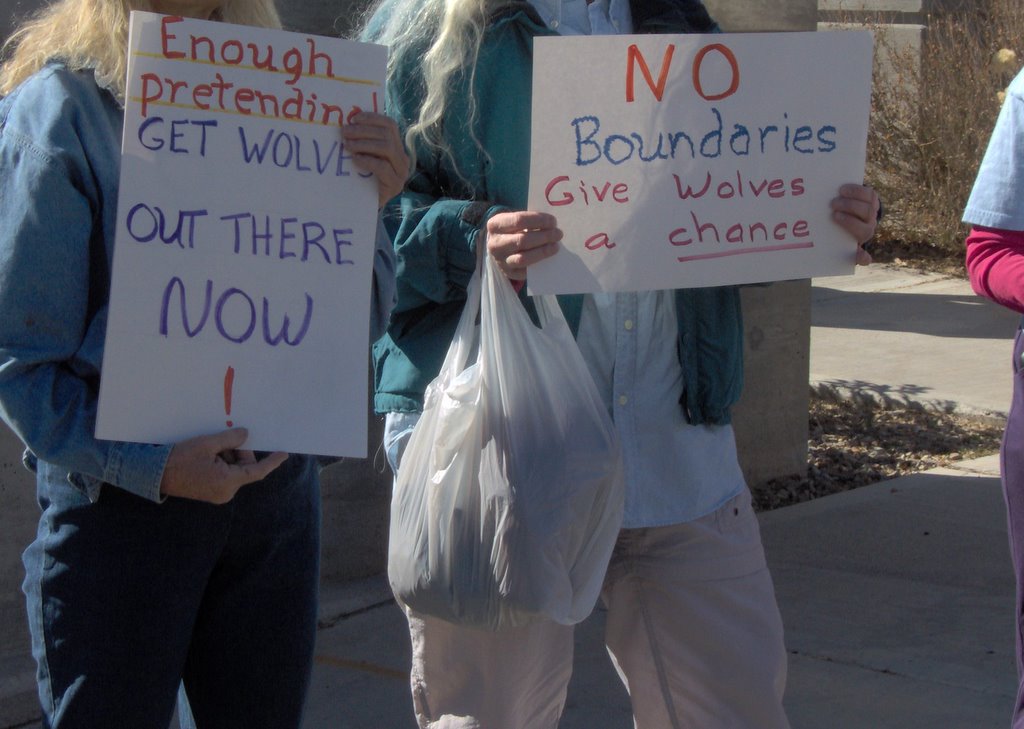
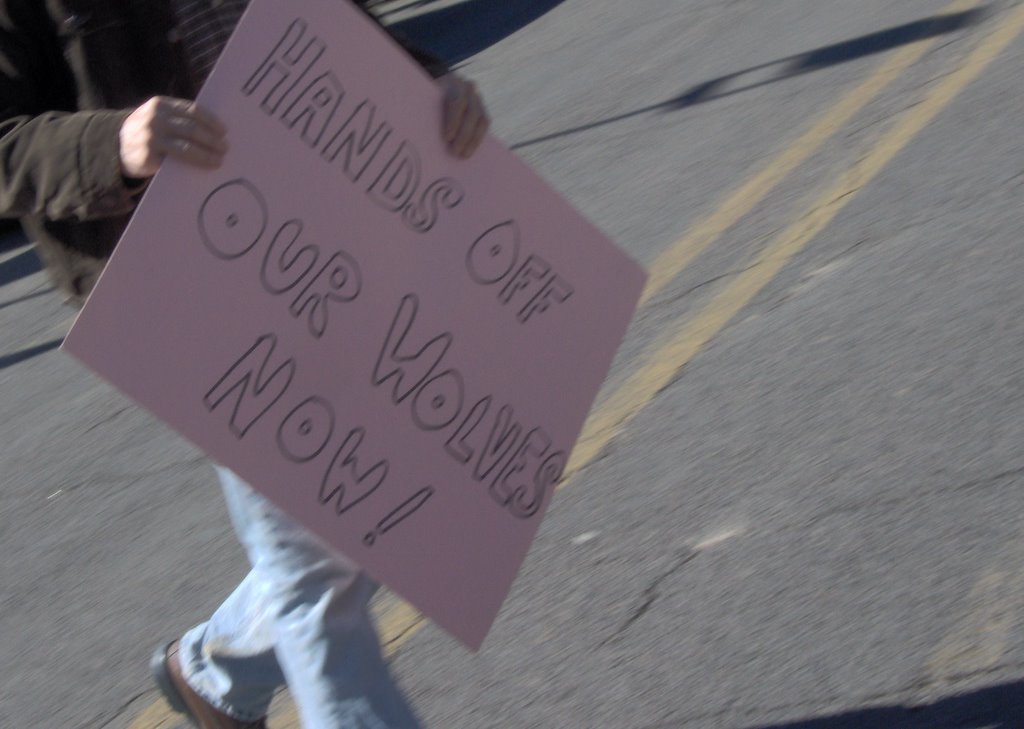
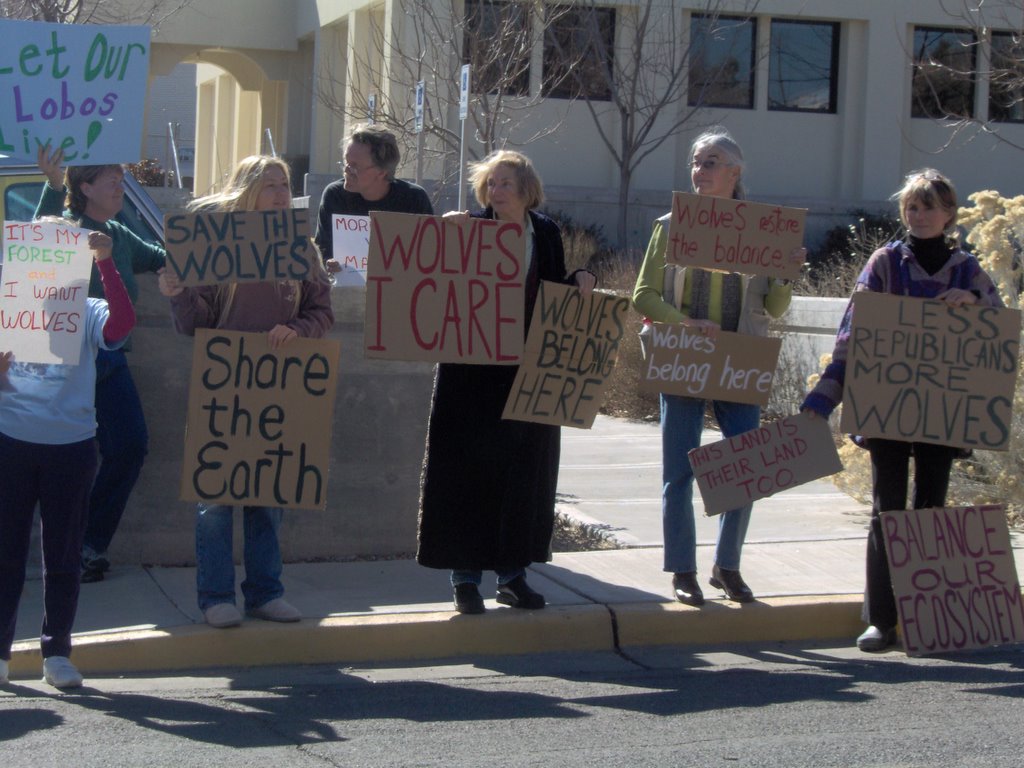
Recently, I had the opportunity to attend the Five Year Review of the Mexican Gray Wolf Reintroduction Program. Located in Silver City, NM, this conference brought together four distinct groups of people representing four distinct opinions of the wolf reintroduction program currently underway in Arizona and New Mexico. While the majority of attendees were pro-wolf, local ranchers also attended, expressing live-stock concerns and their discontent with the reintroduction efforts. Even those of the pro-wolf advocate group varied between professionals and common lay-men. Also, a group came simply seeking understanding of the Mexican Gray Wolf, its problems, and reintroduction. The last group, represented by the reintroduction committee, was there to explain the reintroduction process and its progress over the last five years. In many ways, this conference was a microcosm of the effects opinion will have on the fate of wolves world-wide. My objective for attending the review was not to assist in charting the future of this program, but to observe the process. My job as Assistant Director of one of the nation’s top wolf and high-content wolf-dog sanctuaries, has given me a different, yet hopefully unbiased opinion. From this prospective I listened and observed the factors and comments that will eventually save or destroy the Gray Wolf population that remains today.
Concerned ranchers, representing a minority, were generally well mannered, yet made statements at times that were beyond the realm of plausibility. A claim by one rancher that a pack containing five Mexican Grays, including two yearlings, was enlarge responsible for 1,300 deaths in his cattle herd, was unquestionably unreasonable. Another seemed to blame the drop of 20% in his calving rate solely on the Mexican Grays located in his area. One rancher claimed that his business suffered such radical losses due to the reintroduction of a wolf pack in his area that his “dude ranch” had to be shut down. While these three examples were quite extreme, others were very well founded. In an area of the United States where cattle production is an important segment of the economy those realistic concerns expressed must also be addressed if the program is to be successful.
By far the largest opinion group at the review was the Pro-Wolf group. In this group there were two distinct sub groups represented. Representatives of the national organizations, like Defenders of Wildlife, The Center for Biodiversity and other local wolf organizations, all brought their agendas to the meeting. Most of the presentations were very broad-based and illustrated their concerns for future reintroductions as well as a critique of past performance by the committee. While blatantly agreeing that the reintroduction program was accounting for the decline in the Mexican Gray Wolf population, contradictory cries of “Release them all!” were expressed by the same organizations. While again some areas of concern were quite well founded, there were misinformed and sometime contradictory extremists that offset the voices of legitimate concern.
The second sub-group was comprised of common citizens expressing their desires for successful reintroduction. These people represented about half of the total group, yet consistently spoke on platforms of misinformation. While this segment of the pro-wolfers could carry the greatest impact, their erroneous concerns and unreasonable requests no doubt greatly reduced this effect. It was not from lack of dedication, yet more from a lack of credible information and understanding of the true process required that many of the voices were muted. We must all take an active roll in formulation of a successful program, but to be a benefit to this program, we must first educate ourselves and understand the obstacles we must overcome.
Thankfully, there were those at the review that attended just for the purpose of educating themselves. Without current opinion, they attended to become informed. Coming from all walks--ranchers to shop owners--they came to understand, with the cry from the Earth each time another animal slips into extinction their only common bond. They were willing to cooperate if they only knew how. They were willing to support, just unsure who or what. Concerned citizens of all types were willing to learn. They came there thirsty, but found no fountain to drink from. With a swirling of misinformed opinions, stifling the little factual information provided by the Reintroduction Board, those who came to learn were given little opportunity.
Representing the Reintroduction Program and its convening authority, a five member panel also formed the last group in attendance. This panel had the responsibility to disseminate the information of the reintroduction process gathered over the past five years. Among the positions filled by the committee, one was obviously that of mediator for peace talks when no one wants to talk peace. Included in this agenda was an overview of the future revision of the current program, both in 2006 and long term. This was well presented and very factual. A complete copy of the five year report was made available to all in attendance and is currently available to the public upon request. A moratorium on releases was to take effect when the breeding population grew above six breeding pair. This was not accomplished last year, with only five breeding pairs counted. The current population of 35 wolves remains too distant from the total population targets of 100 wolves to allow this figure to be presently considered.
To date, branches involved in the reintroduction of the Mexican Gray Wolf have spent a total of over 14 million dollars toward this end. The results of these expenditures and combined efforts regrettably show a reduction in the wild wolf population over the Blue Range area. While opinion would point to as many causes as opinions polled, the results remain the same: We have found no profound answers to successful reintroduction and the road to extinction is being paved by good intention.
While the committee attempts to act on the basis of sound scientific analogy, their very existence was developed from overwhelming public opinion. It can be said that public opinion remains the single greatest motivating force today. Whether this force assists in the development of the program or hinders its success remains a question. With sadness, my observations have shown me that this field of opinion has been far off balanced by extreme views on both sides. The disruptions of extremists in forum not only reduce the impact legitimate input could have but also add nothing more than confusion to those people attending with a desire to learn more. With a greater number of pro-wolf supporters gathering at these meetings, shear numbers become a motivating force of their own. While the reintroduction program is not a government attempt to grease the squeaky wheel, public pressure does shape its policies.
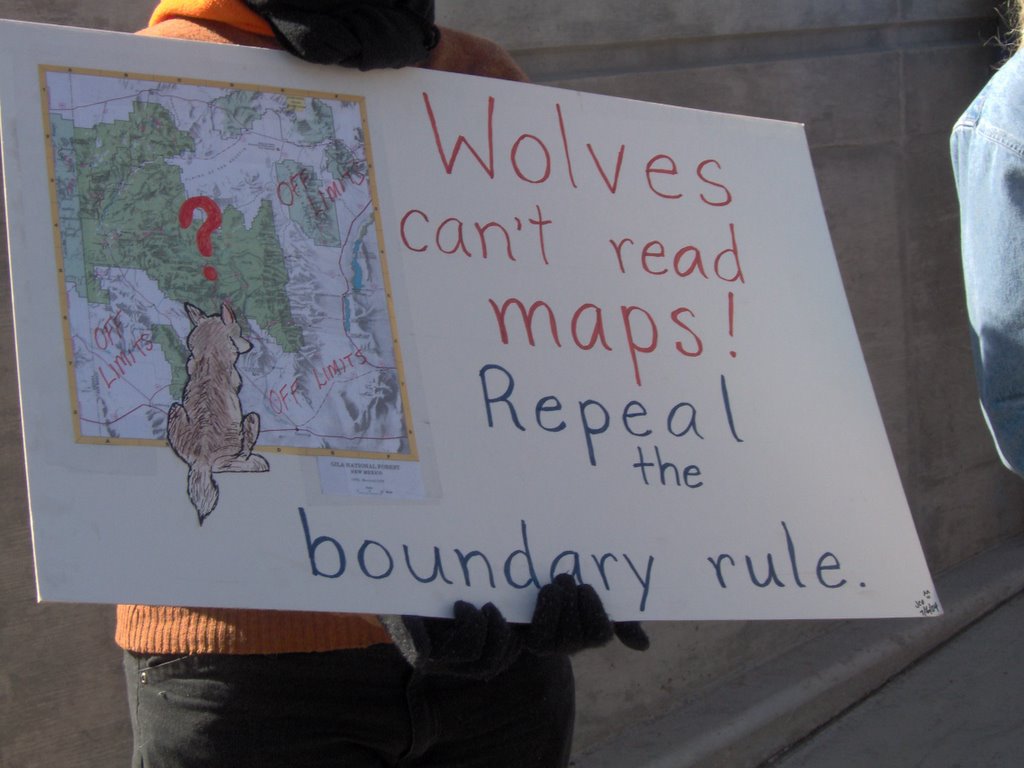
Even with wolves out of bounds being responsible for a high percentage of illegal takes as well as considered the greatest failure of the program, the program still seeks to place pack territory as close as 3 miles of occupied dwellings and five miles from towns. This situation forces the wolves’ interaction with humans and prompts concerns from people on the boundaries of these territories. In an effort to establish areas acceptable for reintroduction, it is not the needs of the wolf but the availability of land that continues to dictate these sites. Sadly, wolves don’t read maps and out of bounders will remain a great failure. As we force these animals into confrontation with man, we continue to watch their numbers dwindle.
We seek to save a vanishing species, yet our enthusiasm to do so appears to be accelerating it to its extinction. We expect an animal such as the Mexican Gray Wolf to behave in a way dictated by public rules and laws. Even if they were to conform, would we still have the animal we sought to preserve in the beginning? The process of formulating a program of successful reintroduction cannot continue on a trial and error basis if the Gray wolf is to survive in the wild. We must consider the wolf’s terms in this process and conform to its needs or consider the possible failure of this multi-million dollar experiment in behavior modification.